 English (Australia)
 English (Australia)
Decorative stainless steel is a versatile and durable material available in different grades like 304 or 430, featuring various finishes and colors such as mirror-polished, brushed, etched, PVD-coated, and anti-fingerprint. It is widely used in architectural elements, interior design, and art due to its corrosion resistance, strength, and aesthetic appeal.
PLEASE NOTE
If you do not see what you are looking for, please contact your local service centre with your specific requirements.
| Common decorative grade (AISI) | UNS | EN (Material No.) | JIS | GB (China) |
| 201 | S20100 | 1.4372 | SUS201 | 1Cr17Mn6Ni5N / 12Cr17Mn6Ni5N |
| 304 | S30400 | 1.4301 | SUS304 | 06Cr19Ni10 |
| 304L | S30403 | 1.4307 | SUS304L | 022Cr19Ni10 |
| 316 | S31600 | 1.4401 | SUS316 | 06Cr17Ni12Mo2 |
| 316L | S31603 | 1.4404 | SUS316L | 022Cr17Ni12Mo2 |
| 430 | S43000 | 1.4016 | SUS430 | 1Cr17 / 10Cr17 |
| 409 / 409L | S40900 | 1.4512 | SUS409L | 022Cr11Ti |
| 441 | S44100* | 1.4509 | SUS441 | 022Cr18NbTi |
Decorative stainless steel is chosen wherever appearance + durability are required:
Curtain walls, exterior panels, sunshades and soffits.
Coastal and city buildings where corrosion resistance and low maintenance are critical.
Patterned, bead-blasted and PVD-colored sheets are very popular.
Elevator doors, cabin walls, ceiling panels, handrails.
Escalator side panels, balustrades and control panels.
Train and metro interiors, station cladding and columns.
Wall cladding, feature walls, column covers.
Reception desks, bar counters, display cabinets, shelves.
Doors, skirting, trims, ceiling strips and lighting frames.
Shopfronts, display windows, signboards and logo panels.
Hotel lobbies, restaurants, bars, luxury boutiques.
Custom etched or colored panels to match brand identity.
Backsplashes, cabinet fronts, worktops.
Restaurant counters, buffet lines, wall panels and doors.
Washroom partitions, mirror frames, decorative trims.
Airport, subway, hospital and school interiors.
Handrails, guardrails, bollards, benches and shelters.
Perforated and embossed panels for ventilation and protection.
Decorative stainless steel is widely used because it combines:
Resistant to rust, staining and many chemicals.
Long service life even in high-traffic environments.
Multiple textures, gloss levels, colors and patterns from the same base material.
Easy to coordinate with glass, wood, stone and other finishes.
Non-porous surface; does not harbor dirt and bacteria easily.
Suitable for public spaces, food-service and sanitary areas.
Higher strength than many decorative metals and laminates.
Good impact resistance and fire performance; does not drip or emit toxic fumes like some plastics when exposed to heat.
High recycled content and fully recyclable at end of life.
Long life and low maintenance reduce resource consumption over the building’s lifetime.

Brushed / hairline finish stainless steel is a directional satin surface created by continuous grinding or polishing in one direction. It delivers a soft, linear grain appearance with reduced gloss, making it one of the most popular decorative finishes for architectural, interior and appliance applications.
Directional grain: Long, parallel polishing lines (hairline) or shorter, uniform lines (standard brush).
Soft sheen, low reflectivity: Satin look instead of mirror shine, reduces glare and harsh reflections.
Scratch-masking effect: The linear grain helps to hide minor scratches and handling marks better than mirror or very smooth finishes.
Touch and feel: Slightly textured to the touch, giving a more “warm” and refined surface than bright-polished sheet.
Produced by abrasive belts or brushes moving in a single direction over the sheet or coil.
Different abrasive grits create different looks:
Fine hairline: dense, delicate lines and more uniform, premium appearance.
Coarser brush: more visible grain and slightly rougher texture.
Can be combined with:
PVD / Ti color coatings (gold, black, bronze, etc.)
Anti-fingerprint coatings for easier cleaning in high-touch areas.
Elegant, modern appearance suitable for both commercial and residential design.
Practical in high-traffic areas: hides small everyday marks better than mirror.
Good balance of aesthetics and maintenance:
Easy to wipe clean
Less sensitive to fingerprints than mirror-polished surfaces
Compatible with common decorative grades: 201, 304, 316 depending on corrosion requirements.
Elevators and Escalators
Car doors and cabin walls
Control panels and trims
Architectural and Interior Panels
Wall cladding and column covers
Lobby and corridor panels
Reception desks, counters and feature walls
Kitchen and Appliances
Refrigerator and oven front panels
Cooker hoods and splashbacks
Cabinet fronts and worktop fascias
Public and Commercial Spaces
Shopfronts and display fixtures
Handrails, balustrades and guardrails
Doors, frames and decorative strips
Match grain direction:
Always align hairline direction on adjacent panels for a continuous, professional look.
Choose suitable grade:
Indoor, dry: 201 / 304 often sufficient.
Outdoor or coastal: 304 minimum, 316 preferred for higher corrosion resistance.
Thickness and stiffness:
Large panels or unsupported façades may require thicker material or backing to prevent oil-canning (visible waviness).
Clean along the direction of the grain, not across it.
Use mild, non-chloride detergents and soft cloths or sponges.
Avoid aggressive abrasives that cut across the hairline and create random scratches.
Periodic cleaning restores the satin sheen and keeps the grain pattern clear and uniform.
Brushed / hairline finish stainless steel combines a linear satin appearance, good scratch-masking ability and easy maintenance, making it one of the most widely used decorative finishes for elevators, architectural cladding, interiors, kitchens and commercial fixtures. Careful control of grain direction, grade selection and cleaning ensures a durable, high-quality visual effect over the life of the installation.

No. 4 / satin finish stainless steel is a fine, uniform, low-gloss surface produced by mechanical grinding and polishing. It’s one of the most common finishes for kitchen equipment, architectural panels and sanitary applications, where a clean, modern look and easy maintenance are important.
Uniform, fine grinding lines
Short, regular polishing marks, usually less directional than hairline.
Appearance is “silk satin” rather than mirror or rough brushed.
Medium reflectivity, low glare
Soft sheen that reflects light gently.
Less glare than mirror finish, but brighter than bead-blasted or very matte surfaces.
Clean, hygienic visual
Smooth enough to be easy to clean and disinfect.
Very common in food, medical and washroom environments.
Produced by abrasive belts with controlled grit (often around 120–320 grit range).
Compared with hairline:
No. 4 has shorter, more “cloudy” lines.
Hairline is long, continuous and strongly directional.
Can be combined with:
PVC protective film for processing and installation.
Optional clear anti-fingerprint coatings in visible high-touch areas.
Widely accepted “standard” decorative finish
Looks professional and “technical”, fits many design styles.
Practical in daily use
Easier to keep looking clean than mirror polish.
Minor cleaning marks blend into the satin texture.
Good hygiene and cleanability
Smooth enough for regular washing and sanitising in kitchens, hospitals and food plants.
Versatile across grades
Available on 201, 304, 316 and other stainless grades depending on corrosion requirements.
Commercial and Industrial Kitchens
Worktops, splashbacks and cabinet fronts
Refrigeration and catering equipment
Cooker hoods, sinks, tables and shelving
Food, Beverage and Pharmaceutical Equipment
Processing equipment enclosures and panels
Doors and covers on tanks and machines
Hygiene-critical panels in production rooms
Public and Sanitary Areas
Washroom partitions and doors
Hand dryers, soap dispensers, bins and accessories
Lift lobby trims, door push plates and kick plates
Architectural and Interior Uses
Wall and ceiling panels in corridors and lobbies
Handrails, balustrade infill panels, door frames
Shopfitting elements, counters and displays
Grade choice vs environment
Indoor, dry, general decorative: 201 or 304.
General outdoor or light industrial: 304 minimum.
Coastal, pool or chemical exposure: 316 preferred.
Direction of grain
For large walls or runs of panels, keep grain direction consistent.
Decide early whether grain runs vertical or horizontal and keep the same orientation for all panels.
Thickness and stiffness
Thin sheet can show “oil-canning” on large flat areas;
consider thicker material, backing, or shallow profiling for big panels.
Clean with mild neutral detergents and soft cloths or non-woven pads.
Wipe along the grain direction to avoid cross-scratches.
Avoid:
Steel wool or carbon-steel brushes (they can cause rust spots).
Strong chloride cleaners left on the surface for long periods.
Regular cleaning keeps the satin finish bright and maintains a professional appearance in visible areas.
No. 4 / satin finish stainless steel offers a clean, professional, low-gloss surface that is easy to maintain and naturally hygienic. Its combination of practicality, aesthetics and versatility makes it the default finish for many kitchens, sanitary installations, architectural panels and industrial equipment where both appearance and performance matter.

Mirror (No. 8) finish stainless steel is a highly polished, near-specular reflective surface with no visible grinding lines. It creates a bright, luxurious appearance and is widely used where designers want maximum visual impact, light reflection and a high-end look.
High reflectivity
Very smooth surface with mirror-like reflection.
Objects can be clearly seen in the reflection (unlike satin or hairline finishes).
No visible grinding lines
Produced by fine polishing; abrasive marks are removed or minimized until the surface appears optically smooth.
High gloss, strong visual presence
Intensifies light, color and depth in a space.
Can visually enlarge narrow corridors, lobbies and small rooms.
Produced by a multi-step process:
Coarse grinding → intermediate polishing → fine buffing and mirror polishing.
Variations can include:
Standard mirror: Bright, specular finish for general decorative use.
Colored mirror (PVD / Ti-coated): Gold, rose gold, black, blue, bronze and other tones applied over the polished base.
Mirror + pattern / etching: Mirror background with etched logos, patterns or text to create contrast.
Supplied usually with:
Protective film to avoid scratching during cutting, bending and installation.
Premium, high-end appearance
Ideal for luxury interiors, hotel lobbies, boutiques and feature areas.
Excellent light reflection
Enhances brightness and can reduce the need for additional decorative lighting.
Creates a sense of space and depth in small or dark areas.
Smooth, non-porous surface
Easy to wipe clean; does not trap dirt easily.
Suitable for hygienic environments if handled correctly.
Flexible in design combinations
Works well with glass, stone, wood and colored metals.
Colored mirror finishes allow brand-specific color schemes.
Architecture and Interiors
Lobby and reception feature walls
Decorative ceilings and light reflectors
Column wraps and façade accents (protected or sheltered areas)
Elevators and Public Spaces
Elevator cabin mirrors and ceiling panels
Decorative strips and frames in lift lobbies
Wall panels in hotels, malls and theatres
Retail and Hospitality
Display back panels, showcases and counters
Brand signage, logo plates and decorative trims
Bar fronts, reception desks and VIP areas
Furniture and Product Design
High-end furniture inlays and panels
Decorative doors, screens and art installations
Custom fixtures, clocks, mirrors and frames
Grade choice vs environment
Indoor, controlled, dry areas: 304 mirror is commonly used.
High-humidity, coastal or chemically exposed areas: 316 mirror is safer for corrosion resistance.
Scratch sensitivity
Mirror finish shows scratches and fingerprints very easily.
Best for:
Areas above hand reach, or
Surfaces protected by barriers, or
Places with controlled traffic and careful cleaning practice.
Panel layout
Plan panel sizes and joint lines to:
Minimize distortion (oil-canning) on large flat surfaces.
Control the way reflections are seen (avoid unwanted visual distortion).
Use adequate thickness or backing/support for large panels.
Combination with other finishes
Mirror strips framed by hairline or No. 4 panels give contrast and reduce visible fingerprints on main touch surfaces.
Handle and maintain carefully to preserve the high gloss:
Routine cleaning
Use soft microfiber cloths and mild neutral cleaners.
Wipe in consistent directions; avoid circular “rubbing” that can create swirl marks.
Avoid abrasive tools
No steel wool, harsh scouring pads or aggressive powders.
Even fine abrasives can dull the mirror and introduce haze.
Fingerprints and stains
Use glass-cleaner-type products or dedicated stainless cleaners suitable for polished surfaces.
Gently remove fingerprints and light marks, then buff dry with a clean cloth.
Protection during fabrication and installation
Keep protective film on the surface as long as possible.
Avoid contact with carbon steel particles (grinding dust, tools) to prevent rust spots.
Mirror (No. 8) finish stainless steel provides a true mirror-like, high-gloss surface that delivers strong visual impact, excellent light reflection and a luxurious look. It is ideal for feature walls, ceilings, elevator cabins, retail displays and high-end interiors, provided that designers account for its scratch and fingerprint sensitivity, select the appropriate stainless grade for the environment, and ensure careful handling, cleaning and protection throughout fabrication and service.
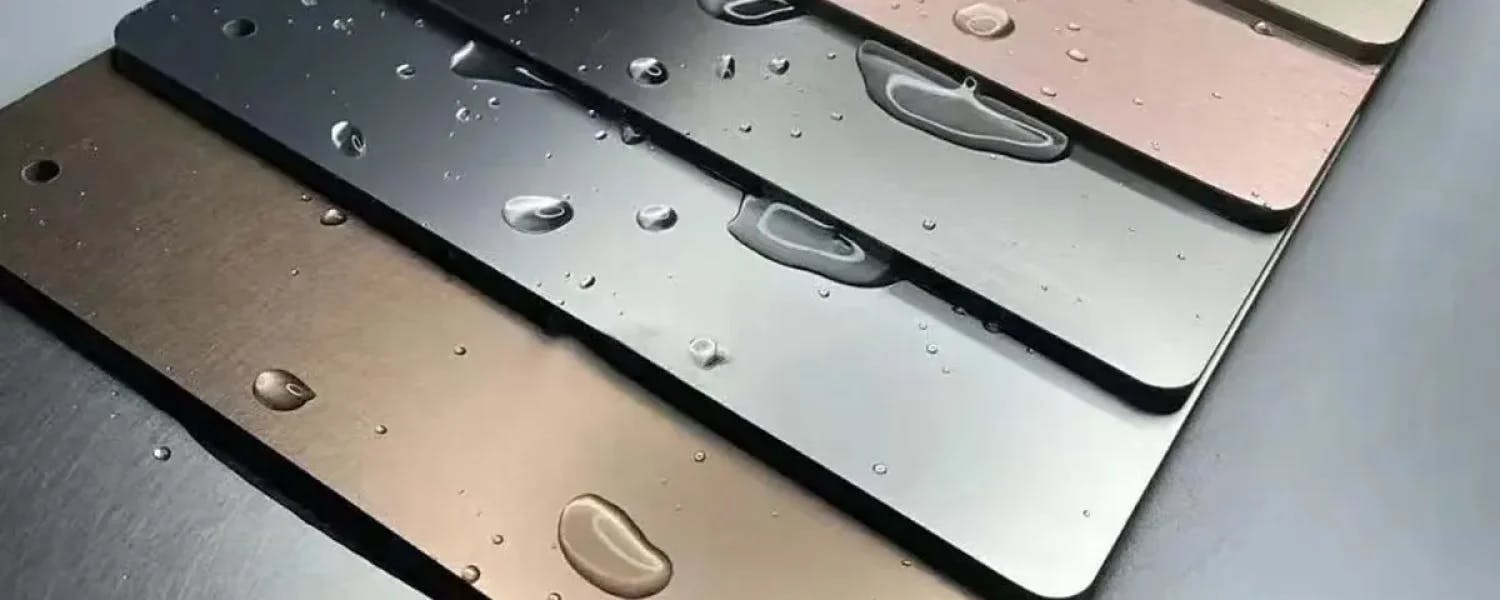
Vibration (also called non-directional polished, “angel hair”, or “PVD vibration” when colored) is a random, swirled satin finish. Instead of straight grinding lines, it has overlapping, multi-directional patterns that create a soft, “cloudy” texture. It’s especially popular where designers want premium look + excellent scratch-hiding ability.
Non-directional pattern
Overlapping, circular or semi-random polishing marks.
No obvious grain direction like hairline or No. 4 finishes.
Soft, diffuse reflection
Satin sheen with very low glare.
Light is scattered, giving a calm, high-end visual effect.
Excellent scratch-masking
Random pattern naturally hides small scratches, fingerprints and touch marks.
Ideal for high-traffic public areas and large decorative surfaces.
Premium “handcrafted” look
Often perceived as more upscale than standard brushed or No. 4 finishes.
Produced using special vibration / orbital polishing machines with non-directional abrasive motion.
Multiple passes with controlled abrasives create:
Fine vibration: subtle, silky pattern.
Coarser vibration: more visible swirls and texture.
Common combinations:
Vibration + PVD color: gold, rose gold, champagne, bronze, black, etc.
Vibration + anti-fingerprint coating for easier cleaning.
Vibration on 304 or 316 base depending on environment.
Best scratch-hiding ability among polished decorative finishes.
Very forgiving in daily use:
New micro-scratches blend into the existing random pattern.
Fingerprints and light stains are less obvious than on mirror or straight hairline.
Low visual noise with high quality feel
Soft reflection creates a calm, refined atmosphere.
Works well in both bright and dim lighting.
Good for large surfaces
Non-directional pattern avoids visible grain mismatches between panels.
High-End Architecture and Interiors
Hotel lobbies, reception walls and feature panels
Column claddings, decorative ceilings and soffits
Luxury apartment and office lobby finishes
Elevators and Public Areas
Elevator cabin walls and doors where constant contact occurs
Corridor wall panels and protection plates
Public building interiors (airports, malls, stations)
Retail, Hospitality and Brand Spaces
Shopfronts, showcases and counters
Bar fronts, back walls and bottle displays
Branded feature walls with vibration + PVD color
Furniture and Custom Fabrication
Tables, cabinet fronts and decorative doors
Screens, room dividers and art panels
Lighting surrounds and fixtures
Grade vs environment
Indoor, dry: 304 vibration is common.
Coastal, outdoor or chemically exposed areas: 316 vibration recommended.
Panel orientation
Because the finish is non-directional, panel orientation is less critical than with hairline/No. 4.
Good for layouts where panels must be rotated or cut in different directions.
Large surfaces
Vibration finish is excellent for large walls and façades:
Reduces visible “patchwork” effect between panels.
Helps to hide minor dents and handling marks.
Color and contrast
Combine vibration stainless with:
Clear stainless trims (No. 4 or hairline)
Glass, stone or wood for warm/cool contrast
PVD colors for brand-specific palettes.
Day-to-day care is simple and forgiving:
Use mild neutral detergent and soft cloths or non-woven pads.
Wipe in any direction; no strict grain alignment is needed.
Avoid aggressive abrasives that could create deep, isolated scratches.
Avoid:
Steel wool and carbon-steel brushes (risk of rust spots).
Strong chloride cleaners left on the surface for long periods.
Regular light cleaning keeps the surface looking even and “fresh” for long-term use, even in busy public environments.
Vibration / non-directional polished stainless steel offers a soft, random satin pattern with outstanding scratch-hiding ability and low glare, making it ideal for high-end interiors, elevators, public spaces, façades and retail/hospitality designs. Its non-directional character simplifies panel layout, while the premium appearance and easy maintenance provide a long-lasting decorative solution where both durability and visual quality are critical.
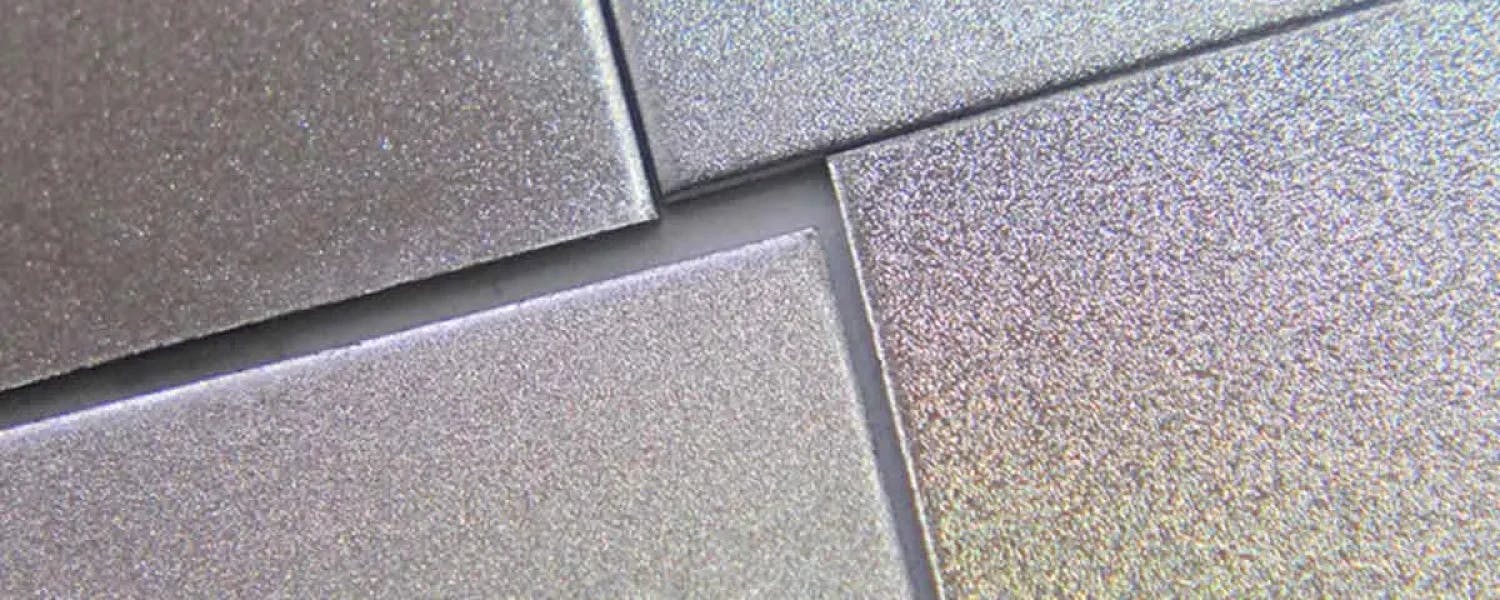
Bead-blasted / sand-blasted stainless steel has a fine, uniform matte surface created by blasting the metal with abrasive media. It gives a soft, low-gloss appearance with very diffuse reflections, ideal for modern, minimalist and low-glare designs.
Uniform matte texture
Fine, even “satin-matte” surface with no visible grinding lines.
Texture can range from very smooth to slightly rough, depending on media and pressure.
Very low reflectivity, anti-glare
Light is scattered in all directions → soft, non-shiny appearance.
Excellent where reflections and glare must be minimized.
Subtle, technical look
Appears calm, restrained and “engineered”.
Fits industrial, contemporary and minimalist interiors and façades.
Made by blasting stainless steel with media such as:
Glass beads (bead-blasted → smoother, silkier surface)
Ceramic or mineral grit (sand-blasted → slightly sharper texture)
Key variables:
Media type and size – finer media = smoother, more refined finish.
Blasting pressure and distance – control roughness and visual “softness”.
Base finish (2B, No. 4, etc.) – influences final look under the blast texture.
Often supplied with protective film to avoid contamination and scratches during transport and fabrication.
Strong anti-glare performance
Perfect for bright environments, façades and surfaces near strong lighting.
Uniform appearance over large areas
No grain direction → panels can be rotated or arranged freely without visible mismatch.
Modern, understated aesthetic
Pairs well with glass, concrete, stone and dark metals in contemporary design.
Good surface for touch areas
Texture helps hide minor fingerprints and smudges better than mirror;
More forgiving than high-gloss finishes, though not as scratch-masking as vibration finish.
Architectural Exteriors
Building façades and cladding
Sunshades, soffits and canopy undersides
Column covers and entrance portals
Interior Architecture
Wall panels in lobbies, corridors and galleries
Staircase stringers, soffits and trims
Ceiling panels and light reflectors with low glare
Public and Transport Spaces
Airport, metro and station wall panels
Protective cladding around circulation zones
Machine and equipment enclosures in visible areas
Industrial and Technical Environments
Equipment covers and cabinets
Control panels, housings and guards
Laboratory and clean-room architectural elements (with appropriate grade selection)
Grade vs environment
Interior, dry: 304 bead-blasted is common.
Exterior, industrial or light coastal: 304 or 316 depending on corrosion risk.
Harsh coastal / chemical: 316 (or higher) recommended.
Texture level
Fine bead-blast → smoother, more refined, easier to clean.
Coarser blast → stronger texture, higher friction, more “industrial” look.
Large panels and layout
Non-directional finish simplifies layout; orientation is not critical.
Good for large façades and long walls where grain matching would be difficult.
Slip and touch
On floors or hand-contact areas, consider how rough the blast should be:
Too smooth → less slip resistance.
Too rough → harder to clean and can catch dirt.
Routine cleaning
Use mild, neutral detergents and soft cloths or non-woven pads.
Rinse well and dry to avoid water marks.
Avoid aggressive methods
No steel wool or carbon-steel brushes (risk of rust contamination).
Avoid harsh abrasives that can change the texture or cause uneven patches.
Stains and marks
For localized stains, use non-abrasive stainless cleaners and test on a small area first.
Because the surface is matte, consistent pressure and direction during cleaning help avoid visible “patch” areas.
Design for easy cleaning
Use drip edges, slopes and detailing that prevent standing water and dirt collection, especially outdoors.
Bead-blasted / sand-blasted stainless steel offers a uniform, low-gloss matte surface with excellent anti-glare properties and a modern, technical aesthetic. It is well suited to façades, architectural panels, public interiors and equipment cladding, especially where designers want subtle appearance, controlled reflections and large, visually consistent surfaces, provided the correct grade, blast texture and cleaning approach are chosen for the environment.

Etched stainless steel is stainless sheet or plate whose surface has been selectively dissolved or roughened by chemical etching to create patterns, logos, textures or artwork. It’s widely used where designers want strong visual identity, depth and contrast beyond what simple brushing or polishing can provide.
Patterned surface
Etching removes metal in selected areas through a mask or resist.
Creates designs ranging from simple lines and logos to complex images.
Depth and contrast
Etched areas are matte, rougher or recessed, while unetched areas can remain mirror, hairline or satin.
This difference in level and reflectivity gives a 3D visual effect.
Flexible appearance
Can be clear stainless (silver on silver) or combined with PVD colors (gold, black, bronze, etc.).
Works on many base finishes: mirror, No. 4, hairline, vibration.
Basic process (chemical etching)
Apply a photoresist / mask to protect selected areas.
Immerse or spray with etchant to dissolve exposed stainless.
Remove resist, clean and, if required, repolish or color.
Depth options
Light etch: shallow, subtle pattern, easier to clean.
Deep etch: more pronounced texture and stronger shadow effect.
Combination finishes
Mirror background + etched matte pattern → strong contrast, very decorative.
Hairline / No. 4 background + etched zones → softer, more technical look.
Etched + PVD color → colored background with stainless pattern, or colored pattern on stainless background.
High design freedom
Custom patterns, logos, text, geometric or organic designs.
Good for branding and unique identity in buildings and interiors.
Durable decoration
Pattern is in the metal, not just printed on the surface.
Resistant to peeling, flaking and normal wear; suitable for long-term use.
Depth and premium appearance
3D effect and mixed gloss levels look richer than flat coatings or prints.
Works well in feature areas where visual impact is important.
Good corrosion resistance maintained
When properly processed and cleaned, stainless corrosion performance is largely preserved (grade-dependent).
Architectural and Interior Panels
Lobby and reception feature walls
Column covers, decorative partitions and ceilings
Hotel, office and residential public-area cladding
Elevators and Public Spaces
Elevator cabin wall panels with patterns or logos
Decorative doors and lobby surrounds
Corridor and station panels that combine durability with design
Retail, Hospitality and Branding
Shopfront backdrops, logo walls and brand panels
Bar fronts, restaurant feature walls and cashier areas
Signboards, nameplates and wayfinding elements
Furniture, Doors and Custom Items
Cabinet fronts, tabletops and screens
Decorative door skins and trims
Art panels, signage plates and custom fixtures
Choose the right base grade
Indoor, dry, decorative: 304 is commonly used.
Coastal, pool or aggressive environments: 316 is safer.
Base finish + etch combination
Mirror base + etch → maximum contrast and “luxury” effect.
Hairline / No. 4 base + etch → more technical, softer reflection.
Vibration base + etch → random background with distinctive pattern, good scratch-hiding.
Pattern design
Fine lines and details are possible but require precise masking.
Larger, bolder patterns are easier to see from distance and more tolerant of wear.
Consider viewing distance:
Close-up: fine detail makes sense.
Far away: use strong, simple shapes.
Panel layout
Plan joint positions so patterns align or repeat logically across panels.
For logos or text, ensure correct orientation and consistent positioning in each panel.
Routine cleaning
Use mild neutral detergents and soft cloths or non-woven pads.
Rinse and dry to avoid streaks and water spots.
Etched vs unetched areas
Etched zones are slightly rougher and can hold more dust;
clean carefully but without harsh abrasives.
For mirror or PVD regions, avoid scratching with strong scouring pads.
Avoid contamination
No steel wool or carbon-steel brushes (to prevent rust spots).
Avoid strong chloride cleaners left on the surface for long periods.
With sensible cleaning, etched stainless retains its pattern clarity and decorative effect for many years.
Etched stainless steel uses controlled chemical etching to create recessed patterns, textures and artwork on stainless sheet, combining the durability and corrosion resistance of stainless with highly customizable, three-dimensional decorative effects. By choosing suitable base grades, finishes, pattern scales and cleaning practices, etched stainless steel becomes a powerful material for feature walls, branded panels, elevator cabins, retail spaces and custom architectural elements where long-lasting visual identity is essential.

Embossed (patterned) stainless steel is sheet or coil that has been mechanically pressed to create raised or recessed surface patterns. It adds texture, depth and improved scratch resistance, making it very popular for architectural, transport, elevator and industrial design.
Three-dimensional texture
Regular raised or indented patterns (e.g. linen, leather, diamond, quilted, checker, dot, line).
Clear tactile feel and visible depth compared with flat finishes.
Reduced visual defects
Patterns break up reflections and help hide small dents, scratches and waviness.
Oil-canning on large panels is less noticeable than on flat sheet.
Controlled reflection
Light is scattered by the texture, giving a softer, more interesting reflection.
Depending on the pattern, effect can be subtle matte or quite sparkling.
Roll embossing / pattern rolling
Stainless sheet or coil is passed through engraved work rolls.
The pattern is transferred continuously over the entire surface.
Common patterns (names vary by mill):
Linen / fabric / leather: fine, irregular texture similar to textile or leather grain.
Diamond / checker / tread: raised diamonds or checks, often used for anti-slip and protection.
Quilted / 5-bar / lozenge: stronger 3D effect, decorative and robust.
Lines / stripes / waves: directional or flowing textures for modern design.
Base grades and finishes
Typically produced on 304 or 316 for decorative/architectural use; 201/430 also used indoors.
Can be made from 2B, No. 4, hairline or even colored PVD sheet before/after embossing, depending on design.
Improved scratch and dent tolerance
Raised pattern protects the base surface.
Everyday marks blend into the texture rather than standing out.
Stiffness and strength effect
Embossing adds rigidity; panels of the same thickness feel stiffer.
Can help reduce panel thickness or backing requirement in some designs.
Better grip (for tread patterns)
Diamond or checker patterns increase slip resistance on floors, steps, ramps and thresholds.
Distinctive visual identity
Textures create characteristic looks from “technical/industrial” to “soft textile-like”.
Works well as a signature surface in interiors and transport.
Architecture and Interior Panels
Wall cladding in corridors, lobbies, service areas.
Column covers, protection plates and kick plates.
Decorative ceilings and soffits where reduced glare is desired.
Elevators and Transport
Elevator cabin walls, doors and rear panels (especially in high-traffic buildings).
Train, metro and bus interior panels where impact resistance and easy cleaning are needed.
Protective sheets in baggage and loading areas.
Floors and Anti-Slip Surfaces
Stair treads, platforms and ramps using diamond/checker pattern.
Thresholds and loading docks in commercial and industrial sites.
Industrial and Utility Areas
Protective wall linings in warehouses, hospitals, schools and airports.
Equipment guards, covers and enclosures where both durability and appearance matter.
Furniture and Custom Design
Cabinet fronts, bar fronts and counters.
Doors, room dividers and decorative panels.
Custom fixtures, display stands and protective trims.
Pattern selection vs function
For anti-slip floors → choose diamond/checker/tread patterns.
For decorative walls and elevators → linen, leather, quilted or wave patterns.
For impact-prone areas → deeper, more robust emboss that resists denting.
Grade and environment
Indoor, dry, low-corrosion: 201, 304 or 430 may be acceptable.
General exterior, urban: 304 recommended.
Coastal, pool, chemical: 316 or higher grade for best corrosion resistance.
Panel layout
Ensure pattern direction and alignment are consistent across adjacent panels (where applicable).
For non-directional patterns (linen, leather), layout is easier and offcuts can be used more flexibly.
Thickness and rigidity
Embossing increases stiffness, but effective thickness at the thinnest point is still important for structural design.
For large, flat surfaces, embossed sheet can help reduce visible waviness compared with flat sheet.
Routine cleaning
Use mild neutral detergents and soft cloths or non-woven pads.
Rinse and dry to remove detergent residues and water marks.
Patterned surface care
Textured areas can hold more dust; use soft brushes or cloths that can reach into recesses.
Avoid overly aggressive abrasives that could change the pattern appearance or create shiny spots.
Avoid contamination
Do not use steel wool or carbon-steel brushes to prevent rust spotting.
Avoid prolonged exposure to strong chloride cleaners; rinse thoroughly if they are used.
With appropriate cleaning, embossed stainless surfaces stay visually stable and forgiving, even in busy public spaces.
Embossed / patterned stainless steel uses mechanical embossing to create durable 3D textures that improve stiffness, hide wear and deliver distinctive visual effects. Available in many patterns, grades and base finishes, it is ideal for architectural cladding, elevators, transport interiors, protective linings and anti-slip surfaces, offering a practical combination of decorative impact, mechanical robustness and stainless corrosion resistance.

Perforated stainless steel is sheet or plate that has been punched or drilled with a regular pattern of holes, slots or decorative shapes. It combines strength, corrosion resistance and transparency/ventilation, making it a key material for modern façades, ceilings, screens, filters and protective guards.
Open area and transparency
A defined percentage of the surface is open (holes), allowing air, light and sound to pass.
From a distance, panels can look solid, semi-transparent or almost “mesh-like” depending on pattern and open area.
Structural strength
Stainless base gives good mechanical strength and impact resistance.
Pattern and thickness can be adjusted to balance stiffness and weight.
Visual texture
Hole shapes and layouts (round, square, slot, hex, custom) create strong graphic patterns.
Backlighting or daylight behind perforated panels produces striking visual effects.
Manufacturing methods
Punching press: mechanical or CNC punching for large volumes and standard patterns.
Laser cutting: flexible, precise, ideal for complex shapes and custom graphics.
Common hole shapes
Round: most common; good strength distribution and easy to design.
Square / rectangular: stronger graphic effect, good for screens and décor.
Slots (long holes): useful for ventilation, acoustic control and directional transparency.
Hexagonal / decorative: for design-led façades and branding.
Pattern layouts
Straight row, staggered (60° or 45°), diagonal, custom geometric or random patterns.
Hole size and pitch (center-to-center distance) define open area and visual density.
Ventilation and airflow
Allows air movement while providing protection, screening or shading.
Ideal for equipment enclosures, plant rooms, parking façades and ventilation grilles.
Light control and shading
Controls natural light; can reduce glare and solar load on façades.
Enables creative daylight patterns on interior surfaces.
Acoustic performance (with backing systems)
Used as a facing for acoustic panels and ceilings.
Perforated face + absorbent backing improves sound absorption in public spaces.
Visual screening and privacy
Provides partial visual barrier while allowing airflow and light.
Used for balcony screens, stair enclosures and mechanical plant screening.
Durability and corrosion resistance
Stainless base resists rust and staining, even in demanding environments (grade-dependent).
Long life, low maintenance compared with painted or non-metallic materials.
Architectural Façades and Screens
Building envelopes and second-skin façades.
Parking garages, plant enclosures and service areas.
Sunshades and brise-soleil elements.
Interior Ceilings and Walls
Perforated ceiling panels for acoustic and visual design.
Wall panels in lobbies, corridors and public spaces.
Backlit feature walls and decorative screens.
Balustrades, Railings and Partitions
Balcony infills and terrace screens.
Staircase balustrades and railing infills.
Room dividers and office partitions combining privacy with transparency.
Industrial and Functional Uses
Machine guards and protective covers.
Filters, sieves and strainers (with appropriate perforations).
Ventilation grilles and intake/exhaust covers.
Retail, Furniture and Custom Design
Shopfront details, counters and display fixtures.
Furniture panels, cabinet doors and shelving.
Art panels, logos and custom perforated graphics.
Grade vs environment
Indoor, dry, decorative: 304 often sufficient; 201 or 430 possible for low-corrosion areas.
General exterior or urban: 304 recommended.
Coastal, pool or chemical: 316 or higher grade.
Hole size, pitch and open area
Smaller holes, closer spacing → finer “mesh” look, more privacy, less airflow.
Larger holes, wider spacing → more transparency, higher ventilation, stronger shadows.
Check open area vs structural requirements (wind load, impact, stiffness).
Panel stiffness and support
Large, thin sheets can deflect; increase thickness or add frames/stiffeners.
Consider span, mounting points and allowable deflection in design.
Orientation and pattern effect
Staggered patterns give more uniform strength and appearance.
Directional slot patterns can guide views and light (e.g., see out but not in at certain angles).
Safety and edges
Deburr and smooth cut edges, especially where people may touch or hold panels.
For public areas, design to avoid sharp corners or accessible small openings that trap fingers.
Routine cleaning
Wash with mild neutral detergents and soft brushes or cloths.
Rinse thoroughly to remove residues, especially in exterior applications.
Perforation care
Holes can trap dust and dirt; use soft brushes or low-pressure washing to clean.
Avoid high-pressure jets that could deform thin panels or force water into sensitive backing systems.
Avoid contamination
No steel wool or carbon-steel tools that could leave rusting particles.
Avoid prolonged contact with strong chloride cleaners; rinse well if used.
With appropriate grade choice and cleaning, perforated stainless steel maintains appearance and performance over long service life, even in demanding environments.
Perforated stainless steel combines decorative design, airflow, light control, screening and structural strength in a single material. By choosing suitable grades, hole shapes, open area and panel support, it becomes a versatile solution for façades, ceilings, acoustic panels, screens, guards and custom architectural features, delivering both functional performance and modern visual impact.