














REACH 알루미늄
화학물질의 등록, 평가, 승인 및 제한에 관한 EC 규정 1907/2006(REACH).
REACH 집행 규정 2008
규정에 따르면 ‘모든 금속을 포함하는 모든 ’물질'은 REACH에 등록해야 합니다. 그러나 REACH 규정은 ‘물질'과 ’제제‘(REACH 적용 대상)를 ’완제품‘(REACH 규정 적용 대상이 아니며 등록이 필요하지 않음)과 구별한다는 점에 유의하는 것이 중요합니다.
알루미늄, 알루미늄 합금, 스테인리스강 및 구리 합금으로 된 저희 표준 반제품(시트, 플레이트, 튜브, 바, 압출재 등)은 모두 ‘제품'으로 분류되어 등록할 필요가 없습니다. 빌렛, 블룸, 연속 주조 슬래브 및 가공된 잉곳 또한 ’제품'으로 분류되어 등록할 필요가 없습니다. 그러나 ‘주조 상태’ 잉곳, 롤링 잉곳, 압출 공정을 위해 생산된 잉곳과 같은 특정 유형의 잉곳은 ‘준비물'로 분류되므로 등록해야 합니다.
이러한 이유로 귀하께 공급되는 당사의 표준 범위 제품은 ‘article'로 분류되며, 따라서 REACH에 따라 등록할 필요가 없음을 확인해 드립니다.
알루미늄 및 스테인리스 강 생산도면 사본은 ‘물질’, ‘혼합물’, ‘제품'의 정의를 명확히 하는 데 도움이 되도록 요청 시 제공될 수 있습니다.’
REACH 등록이 필요한 ‘물질’ 및 ‘제제'가 등록되었는지 확인하거나 해당 화학 물질이 없는지 확인하기 위해 현재 공급업체에 대한 실사(Due diligence)를 수행했습니다. 이러한 이유로 합리적으로 실행 가능한 범위 내에서 위에 명시된 대부분의 표준 반제품에는 다음 선언을 제외하고 2020년 6월 25일자 현재 매우 우려되는 물질(SVHC) 후보 목록에 등재된 화학 물질이 포함되어 있지 않음을 확인할 수 있습니다.
추가적으로, 고객이 특정 등급의 재료를 주문했는데, 해당 등급을 다루는 영국, 유럽 또는 국제 표준에서 표준/등급 요구 사항을 충족하기 위해 하나 이상의 물질을 의도적으로 첨가하도록 요구하는 경우. 이 경우, 해당 재료는 표준 요구 사항에 따라 각 물질의 값을 포함하게 됩니다.
저희가 판매하는 일부 알루미늄 및 구리/황동 제품에는 2020년 6월 25일 개정된 REACH 규정의 부록 XIV에 명시된 화학 물질이 0.1% 이상 함유되어 있음을 선언합니다.
- 납
- CAS/EINICS: CAS 7439-92-1 / EINICS 231-100-4
- 포함 날짜: 2018-06-27
- 유해성: 생식독성 구분 1A
- H360FD - 생식능력에 해를 끼칠 수 있음. 태아에 해를 끼칠 수 있음
- H362 - 젖먹이 아동에게 해를 끼칠 수 있음
SVHC 물질의 “후보 물질 목록”은 ECHA에서 주기적으로 업데이트되며 다음에서 확인할 수 있습니다. https://echa.europa.eu/candida…
정상적인 재고 범위를 벗어나는 다른 제품이나 금속 종류를 저희에게서 구매하시는 경우, 해당 특정 제품에 언급된 고위험성 우려 물질이 포함되지 않는지 생산자와 확인해야 하며, 이에 따라 안내해 드리겠습니다.
REACH 규정 준수에 대한 당사의 입장을 이 정보가 명확히 해줄 것으로 믿습니다. 질문이 있거나 확실하지 않은 특정 제품에 대해 확인하고 싶은 사항이 있으시면 당사에 문의해 주십시오.
이 정책은 법률 개정 시 그리고 최소한 연 1회 업데이트될 것입니다.
이 정책은 플라스틱 및 복합 패널 전 품목을 명시적으로 제외합니다.
알루미늄 제품 금속 가공
알루미늄 가공 예시는 보크사이트에서 최종 알루미늄 제품으로 전환되는 시점을 보여주기 위해 포함되었습니다. 철/강철과 같은 다른 금속의 가공은 다른 전환 시점을 보일 수 있다는 점에 유의해야 합니다. 다음 그림은 다양한 가공 단계와 각 단계별 원자재의 상태를 보여줍니다.
알루미늄 생산 공정
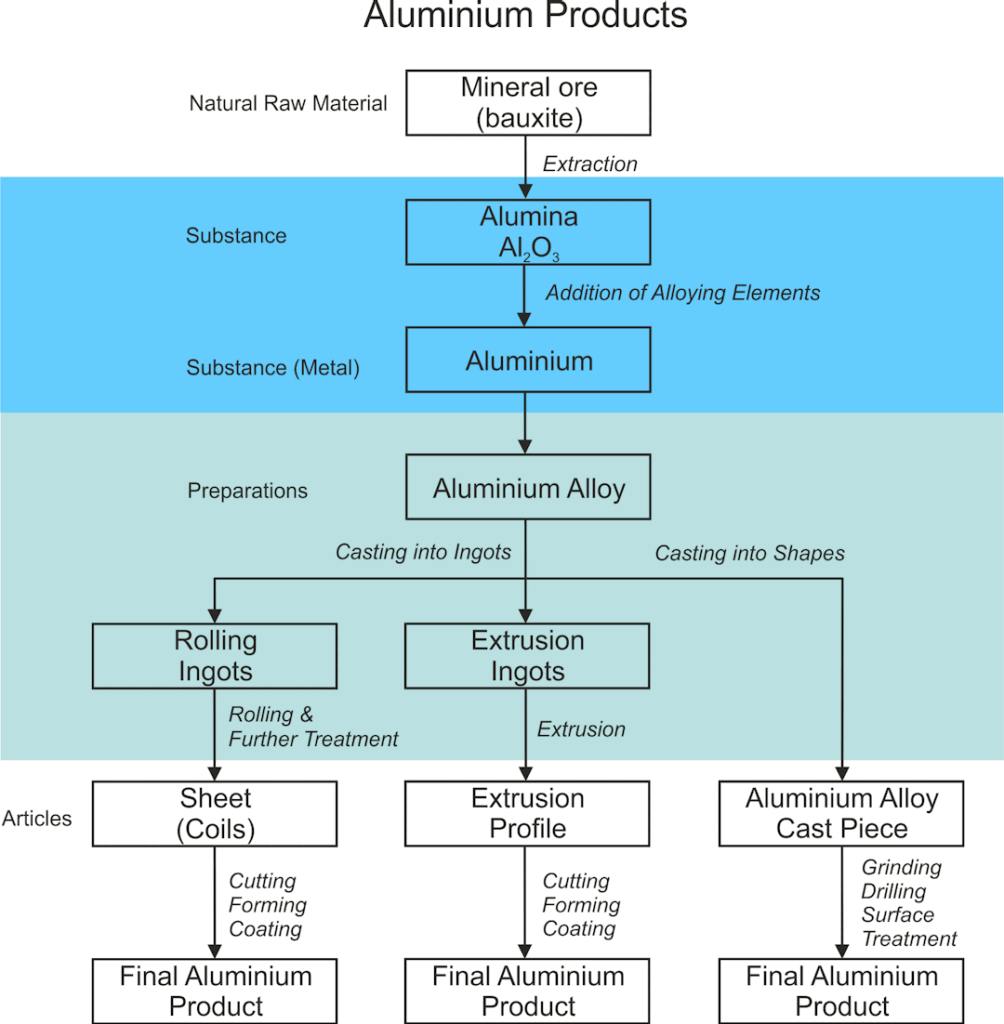
준비 단계에서 기사로 전환되는 지점은 롤링 잉곳과 시트, 압출 잉곳과 압출 프로파일, 알루미늄 합금과 합금 주조물 사이에 설정됩니다.
금속 및 합금 반제품(코일 및 프로파일 형태)과 유사한 원자재 유형은 다음과 같습니다. 봉, 블랭크(절단, 가공, 압착 등), 코일(코팅 및 비코팅), 압출 프로파일, 필름 및 필라멘트, 포일 및 리본, 단조품, 플레이트, 파이프 및 튜브(주조, 심리스, 용접), 파이프 및 튜브 피팅, 소결 반제품 및 최종 제품, 시트 및 스트립(코팅 및 비코팅), 스탬핑, 선재 및 와이어(코팅 및 비코팅).
범위 – RoHS 및 WEEE
폐전기전자제품 지침(WEEE), 흔히 WEEE라고 불림. 이는 전기 및 전자 장비 제조업체를 대상으로 하며 두 가지 주요 목표를 가지고 있습니다:
- 제조업체는 제품의 수명이 다한 후 재활용할 책임도 가지며, 제조업체가 달성해야 하는 목표가 있습니다.
- 전기전자제품 제조 공정에서 환경 유해 물질 사용을 근절하기 위함이다. 이를 위해 WEEE 지침은 유해물질 제한(RoHS) 지침을 참조한다.
RoHS 지침의 주요 목표는 4가지 금속과 2가지 난연제의 사용을 근절하는 것입니다. 이러한 각 물질에 대해 전기 및 전자 장비에서 중량 기준으로 최대 0.1%의 농도가 허용됩니다.